
Crisis Communications for Business Continuity Planning
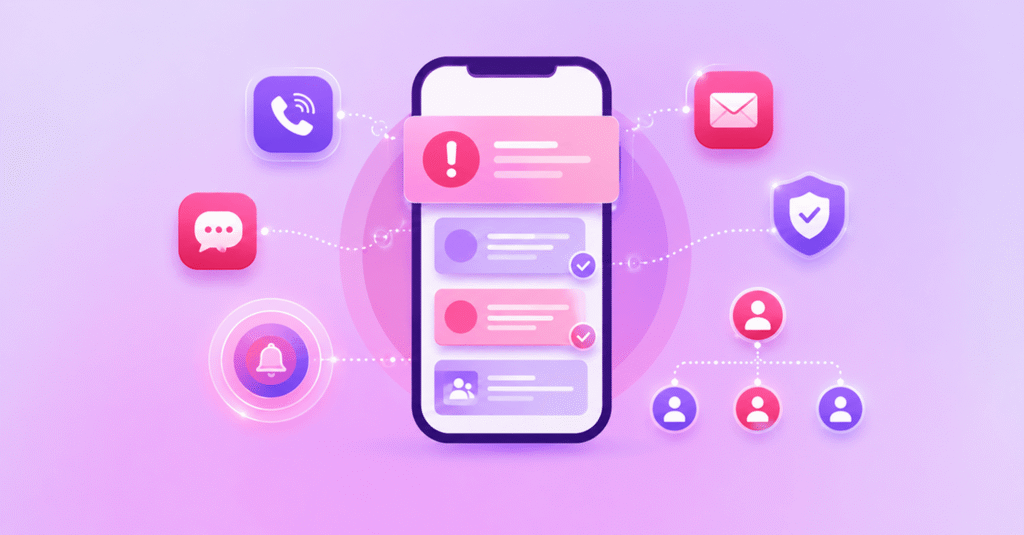
Sometimes things just don’t go to plan.
IT systems go down, extreme weather impacts production, buildings need to be evacuated…
Whatever industry your organisation operates in, there are certain factors out of your control that can lead to a crisis situation.
But what’s always in your control, is how you prepare and respond to these moments of crisis.
Clear, timely and accessible communication during a crisis can put minds at ease, prevent compliance or legal issues down the line, and – most importantly – save lives.
Having said that, emergency messaging is often an afterthought for many enterprise and government organisations.
Rather than being proactive and preparing for the unexpected, many are reactive, with only 49% of US businesses having a formal crisis communications plan in place.
This blog post will explore how organisations can use messaging to make sure they’re ready for the unexpected and better use crisis communications for business continuity planning.
What is Crisis Communications in Business Continuity Planning?
Business continuity planning (BCP) is the process of preparing your organisation to keep operating through unexpected disruptions.
Most organisations invest heavily in the technical side of this, backing up data, building redundant systems, setting recovery time objectives. But there’s a critical piece that often gets left out: how you actually communicate when things go wrong.
Crisis communications is the practice of delivering timely, accurate and targeted messages to the right people during a disruption.
In a BCP context, that means reaching your employees, customers, suppliers and partners with the information they need, through channels that actually work, even when your primary systems are down.
Think of your BCP as the plan, and your crisis communications strategy as the voice of that plan. Without it, even the most thorough recovery procedures can fall apart.
Teams don’t know what to do, customers don’t know what’s happening, and leadership loses visibility over who has received critical information and who hasn’t.
Effective BCP communications covers both internal messaging, keeping your people informed and coordinated, and external messaging, managing the expectations of customers and stakeholders while you work to restore normal operations.
Why Crisis Communications is important for Business Continuity
When a crisis hits, the first few minutes matter enormously.
Delayed or unclear communication doesn’t just slow down your response, it creates confusion, damages trust, and in serious situations, can put people at risk.
Regulatory and legal exposure is another factor that’s easy to underestimate.
Many industries, from financial services to healthcare to critical infrastructure, have obligations around how quickly and clearly they must communicate during an incident. Falling short of those obligations because your communication process wasn’t defined in advance is an avoidable risk.
There’s also the reputational dimension. Customers and partners are far more forgiving of disruptions when they’re kept informed. It’s the silence that damages relationships, not the incident itself. Organisations that communicate clearly and quickly during a crisis consistently recover faster, both operationally and in terms of stakeholder trust.
Crisis Communications Examples for Business Continuity Planning
Every organisation is exposed to different types of crisis scenarios depending on their size, the industry they operate in and the geographical locations where they do business.
While the specifics will vary, most disruptions tend to fall into one of the following five categories where having crisis communication messaging in place makes all the difference.
IT Outages and System Downtime
Most organisations will experience IT outages at some point.
Whether it’s a CRM going down, an email server dropping out, or a cloud platform becoming unavailable, without a communication plan in place, your IT team can quickly find themselves fielding calls from across the business while simultaneously trying to diagnose the issue.
With crisis communication messaging built into your BCP, you might have automated alerts set up for affected teams the moment an incident is detected, with a clear status update and estimated resolution time.
Customers with active interactions could receive a proactive message via SMS, keeping expectations managed while your team works on a fix.
A business SMS platform makes this kind of multi-audience notification reliable and fast, even when internal systems are under pressure.
Cybersecurity Incidents
Cyber threats are no longer a risk reserved for large enterprises or financial institutions.
If you’ve experienced a breach before, you’ll know that the pressure is immediate and your security team needs to move fast, but so does your communications team.
Employees may need specific instructions depending on their role. Leadership needs to know what’s happening without wading through technical detail. And if customer data is involved, there are likely legal obligations around how quickly those affected must be notified.
Having pre-approved message templates and clear escalation paths built into your BCP means you’re not writing communications from scratch while a breach is actively unfolding.
An incident management plan in place for these types of scenarios gives you the structure to respond quickly, consistently and with a full audit trail.
Natural Disasters and Severe Weather
If your organisation has staff spread across multiple locations, extreme weather is a risk you can’t afford to ignore.
Bushfires, floods and severe storms don’t follow business hours, and your people need clear direction fast when they hit.
Should they head into the office or the warehouse? Are they ok to work remotely? Is the site safe?
Without a communication plan, those questions get answered inconsistently, or not at all, and could put your staff at risk.
Geo-targeted SMS alerts mean you can reach employees in affected areas specifically, without sending unnecessary messages to your entire workforce.
Two-way messaging lets you confirm who has received the update and who still needs to be reached, which matters enormously when duty of care is on the line.
Workplace Safety and Evacuation
Your organisation has a duty of care to everyone in your buildings, and when a safety situation arises, you’ll have very little time to act.
Fires, gas leaks or security threats on site aren’t scenarios where you can rely on email or wait for people to check the intranet.
Your people, staff and customers alike, need to receive clear instructions on their mobile devices, instantly, regardless of what else is happening across your systems.
Getting evacuation instructions out fast and being able to confirm receipt digitally can make a genuine difference to both the outcome and your organisation’s compliance position afterwards.
Supply Chain and Operational Disruption
Of course, not all crises are life-threatening.
Sometimes it might be a supplier going quiet, a shipment that’s been delayed or a production issue that’s going to affect your customers before the end of the day.
These situations are often manageable, but only if your procurement, operations and customer service teams are across the situation at the same time and with enough context to act.
If information travels slowly or inconsistently in these situations, small disruptions often become bigger ones.
Reaching out to affected customers early, before they come to you, is also where proactive crisis communication messaging protects relationships that could otherwise take a long time to rebuild.
What Should be Included in a Crisis Communications Plan?
Now you’re across what crisis communications for business continuity planning is and some common examples, let’s look at what a solid plan actually needs to include.
A crisis communications plan isn’t a single document you file away and forget. It’s a living framework that your teams understand, have practised, and can activate under pressure.
The difference between organisations that communicate well in a crisis and those that don’t usually comes down to preparation done well before an incident ever occurs.
At a minimum, your crisis communications plan should define:
- Key Audiences: Who needs to receive communications during a disruption, from employees and customers through to suppliers, partners and leadership.
- Communication Owners and Approval Pathways: Who is responsible for sending communications and who needs to sign off, so there is no ambiguity when it matters most.
- Message Templates for Common Disruption Scenarios: Pre-written communications for your most likely crisis scenarios, so your team is adapting a message rather than writing one from scratch mid-incident.
- Priority Channels for Urgent and Non-Urgent Updates: Which channels to use and when, recognising that SMS and push notifications serve a very different purpose to email or intranet posts.
- Escalation Rules for High-Risk Incidents: Clear thresholds that ensure a minor IT issue and a building evacuation trigger appropriately different responses.
- Two-Way Response and Acknowledgement Requirements: Which communications require a confirmed response, so you have visibility over who has received and acted on critical messages.
- Reporting Needs: How you capture delivery, response and audit history to support post-incident review and any regulatory or compliance requirements.
- Post-Incident Follow-Up Communications: How you close the loop with affected audiences once normal operations resume, an often overlooked but important step in maintaining stakeholder trust.
Crisis Communications for BCP FAQs
What is the difference between crisis communications and business continuity planning?
Crisis communications is how an organisation shares timely information during a disruptive event. Business continuity planning is the broader process for keeping operations running during and after disruption. In a business continuity plan, crisis communications helps ensure employees, customers, partners and response teams know what is happening and what action to take.
What are the benefits of a crisis communications plan?
A crisis communications plan helps organisations respond faster, reduce confusion and keep stakeholders informed during disruption. It defines who needs to be contacted, which messages should be sent, what channels should be used and who owns each update. This supports employee safety, customer trust and stronger coordination across teams.
What channels should organisations use for crisis communication messaging?
Organisations should use a mix of crisis communication channels, including SMS, voice, email, mobile app notifications, WhatsApp and internal collaboration tools. For urgent alerts, SMS and voice are often best because they reach people quickly. In regulated sectors, channels should also support security, delivery tracking, audit trails and escalation if a message is missed.
What should be included in a business continuity communication plan?
A business continuity communication plan should include key audiences, communication owners, approval processes, message templates, priority channels, escalation rules and backup contact methods. It should also define how updates will be tracked, who needs to acknowledge messages and how follow-up communication will be managed after the incident.
Why is an emergency communication plan important for business continuity?
An emergency communication plan is important because disruption can create confusion, delays and safety risks. It helps organisations contact the right people quickly, share clear instructions and coordinate the response. For business continuity, emergency communication supports faster decision-making and helps teams stay aligned when normal operations are disrupted.
Start Sending Your BCP Communications with Soprano
Crisis communications isn’t something you want to be figuring out on the fly.
Having the right messaging infrastructure in place before you need it means your teams can focus on managing the situation, not scrambling to reach people.
Soprano’s CPaaS Platform is trusted by some of the world’s largest enterprise and government organisations to power their crisis communications when it matters most, delivering reliable, scalable messaging across SMS, WhatsApp. voice, push notifications and more.
Whether you’re coordinating an IT incident response, managing a severe weather alert or keeping customers informed through a service disruption, Soprano ensures your messages get through to the right people, through the right channels, with the audit trail to back it up.
Ready to build crisis communications into your BCP? Book a demo with the Soprano team today.